Barndominium Site Preparation in Idaho
We prepare barndominium sites in Idaho, and the work starts before any machine arrives. We confirm the zoning allows a dwelling, find every irrigation ditch, lateral and drain crossing the parcel, work from the public health district's septic site evaluation where there is no sewer, and place the well, drainfield and house relative to each other. Then comes the dirt: we clear, build the drive and the building pad, and put in the drainage and utility trenches, so the foundation goes onto firm, well-drained ground.
Ditches, Drainfields and Wells Before Dirt
Much of the Treasure Valley and Magic Valley is irrigated land, and irrigation ditches, laterals and drains cross parcels that look empty. Idaho law gives a ditch's owner a right-of-way along it, including the right to enter and maintain it without notice, and says no one may put a road, fence, gate, pipeline, utility or structure in that right-of-way without the written permission of the ditch's owner or operator. An encroachment that interferes can be ordered removed at the owner's expense. So the first job on an Idaho site is to find every ditch and who runs it.
The second is water and waste. Off sewer, the public health district for your county evaluates the site and decides where a septic drainfield can go and what kind the soil allows. Every well needs a drilling permit from the Idaho Department of Water Resources and must be drilled by a licensed driller, and the department's own start-card permit for a single-family domestic well asks whether the septic tanks and drainfields nearby have been located. Only when the ditch, the drainfield and the well are fixed on the site plan do we place the house, the shop and the drive.
Site Preparation: how the work runs
Four stages, in this order. The sequence matters more than it looks: settling the zoning, the septic site evaluation, the snow load and the building permit before anything is fabricated is what keeps an Idaho build from stalling.
Zoning, ditches and easements
We check the parcel's zoning and setbacks, locate irrigation ditches, laterals and drains and the rights-of-way along them, and note any recorded easements. Flood mapping and slope belong in the same first look, because they decide where a house can sit.
Septic evaluation and well location
The public health district's site evaluation identifies where the drainfield can go. You contract the well directly with a driller licensed by the Idaho Department of Water Resources. We then lay out the house, drive and pad around the separation between well, drainfield and structure.
Clearing, drive and pad
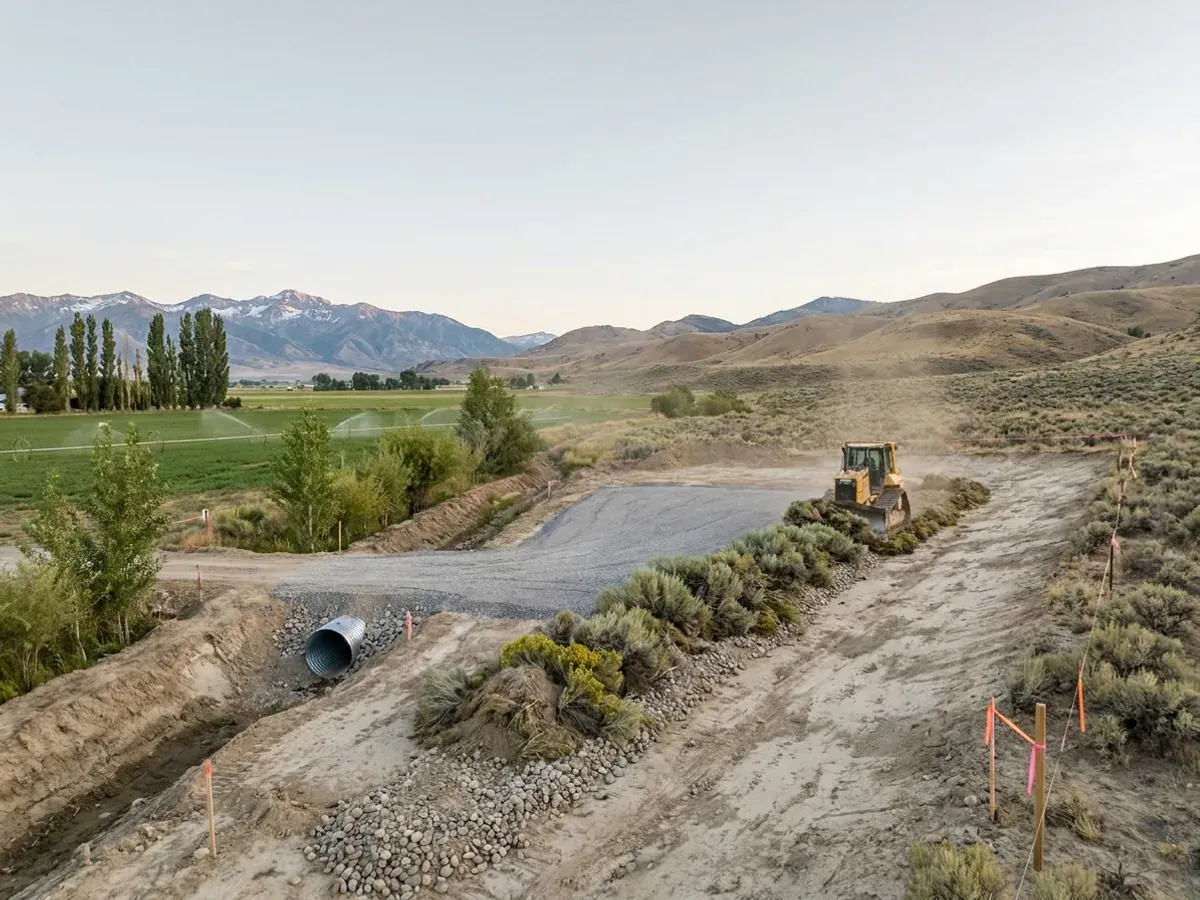
We clear to the approved layout, build an all-weather drive that will carry concrete and steel trucks, and compact the building pad. Where the drive crosses a ditch, the culvert or crossing needs the ditch owner's written permission first.
Drainage and utility runs
We shape surface drainage away from the pad, lay footing drains where the ground calls for them, and dig the trenches for power and water to the house. The site is then ready for footings dug to the frost depth set for your site.
The ditch was there first
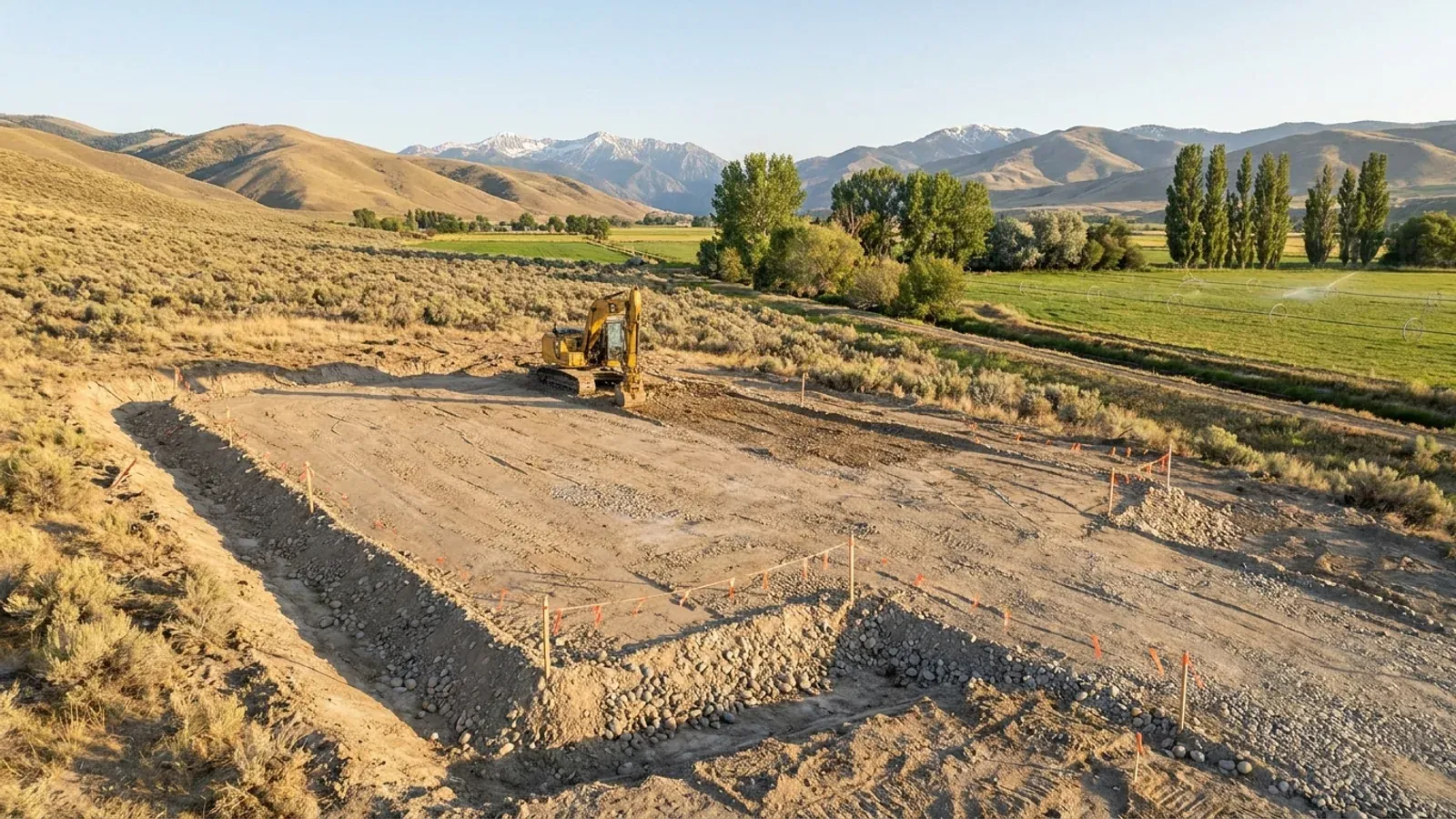
Idaho law gives the owner of an irrigation ditch, canal, lateral or drain a right-of-way along it and bars roads, fences, utilities and structures in that right-of-way without the owner's or operator's written permission. On irrigated land in the Treasure and Magic valleys, the drive, the shop apron and the power trench all have to respect it, so we map the ditches before we place anything.
Where we deliver site preparation
In Idaho the line that matters is usually a city limit. Inside one, the city zones the land and, where it runs a building program, issues the permit. Outside one, the county zones the land and, if it runs a building program, permits and inspects the house. What changes from place to place is the zoning, the snow load and frost depth the local building department sets, which of the seven public health districts evaluates and permits the septic system, and whether irrigation ditches cross the parcel.
Barndominium builders across Idaho.
Every city and county in Idaho has its own answer on zoning, permits, snow load and septic. The service area pages set out what each one publishes.
What actually decides the price
Square footage is the number everyone leads with, and it is rarely the one that moves a barndominium budget. These four do.
-
Clearing and slope
Timber, brush, rock and slope decide how much material has to be moved to make a level pad. A sloped mountain parcel can take several times the dirt work of flat valley ground.
-
Drive length and crossings
A long drive, a culvert over a ditch, or a crossing that needs the ditch owner's permission can cost more than the pad itself on rural acreage.
-
Drainage and groundwater
Where the ground stays wet, or where irrigation raises the water table in summer, the pad and footings need more fill, footing drains or both.
-
Utility distance
The distance from the road to the house for power, and from the well to the house for water, sets the length of the trenches and the size of the service. It is worth deciding the house location with those runs in mind.
Site Preparation in Idaho: common questions
8 questions we get asked most often about building in Idaho. If yours is not on the list, ask it directly.
What does barndominium site preparation include?
Why do irrigation ditches matter for my build?
Do you install the septic system?
Do you drill the well?
How deep do the footings need to go?
What time of year suits site work in Idaho?
Can you build a drive across an irrigation ditch?
Do I need a permit for site work?
Sources
- Idaho Code 42-1102, ditch and canal rights-of-way — Idaho Legislature
- Septic and Septage — Idaho Department of Environmental Quality
- Wells Overview — Idaho Department of Water Resources
- Start Card Permit, single family domestic well only (Form 235-3) — Idaho Department of Water Resources
- Idaho Code 39-4116, local adoption and enforcement of building codes — Idaho Legislature
- Idaho Code 67-6511, zoning ordinance — Idaho Legislature
Keep reading
The pages that answer the next question this one raises.
Ready to put site preparation against a real plan? Start there and the rest follows.
Tell us about the land
Tell us where the parcel is and what you want on it, and we will come back with who has jurisdiction, what the land needs before it can be built on, and a realistic budget range. Starting the survey costs nothing.