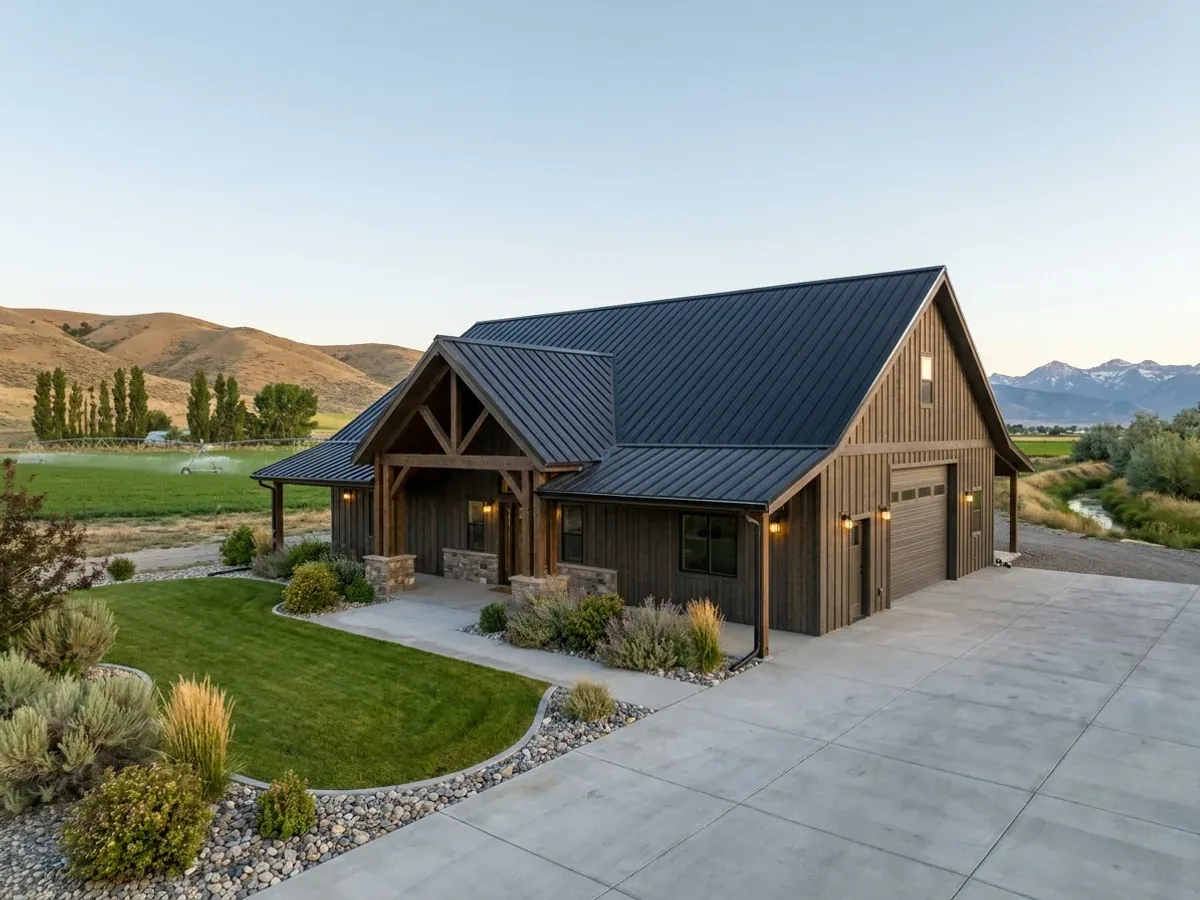
Turnkey Barndominiums in Idaho
A turnkey barndominium in Idaho takes you from raw land to a finished house under one agreement. We build turnkey barndominiums in the order the approvals have to come: the zoning answer before the design, the health district's septic site evaluation before the plan is final, the well and any irrigation ditches located before the house is placed, and the building permit, where a city or county runs a building program, before anything is ordered. One schedule, one point of contact, and one party answerable when the planning office, the health district or the building department has a question.
One Sequence From Raw Land to Move-In
Most barndominium delays in Idaho are not construction delays. They are a septic evaluation booked after the plan was drawn, a well drilled where the drainfield needed to go, a shop apron poured across an irrigation lateral, or a steel frame ordered for the wrong snow load. A turnkey build exists to get the order right.
So we start with the land. The county or city planning office tells us what the zoning allows. Off sewer, the public health district for your county evaluates the site and permits the septic system. You or your well driller take out the drilling permit from the Idaho Department of Water Resources, and a licensed driller builds the well. Then we draw the house around those answers, confirm the design criteria with the building department, and build: foundation, frame, shell, insulation, interior and finish, with licensed trade contractors handling plumbing, electrical and HVAC.
Turnkey Builds: how the work runs
Four stages, in this order. The sequence matters more than it looks: settling the zoning, the septic site evaluation, the snow load and the building permit before anything is fabricated is what keeps an Idaho build from stalling.
Land, zoning and feasibility
We look at the zoning and minimum lot rules, access, slope, flood mapping, irrigation ditches and easements, and where a septic system and a well could go. If the parcel needs a zoning approval for a dwelling, we find that out first, because nothing else is worth paying for until it is decided.
Septic, water and design
Off sewer, the public health district's site evaluation shows where the drainfield can go and what kind the site may take. The well is drilled under an Idaho Department of Water Resources permit by a licensed driller, and we draw the plan set around both, to the design criteria for your site.
Permit and site work
We prepare and submit the building permit application where a city or county runs a building program. Once the permits are in hand we clear the site, build the drive and pad, and pour the foundation.
Build, inspect and hand over
We build the frame, shell, insulation, interior and finishes, with licensed trade contractors handling plumbing, electrical and HVAC. Where a building department serves the land it inspects each stage, and you get the keys after the final inspection.
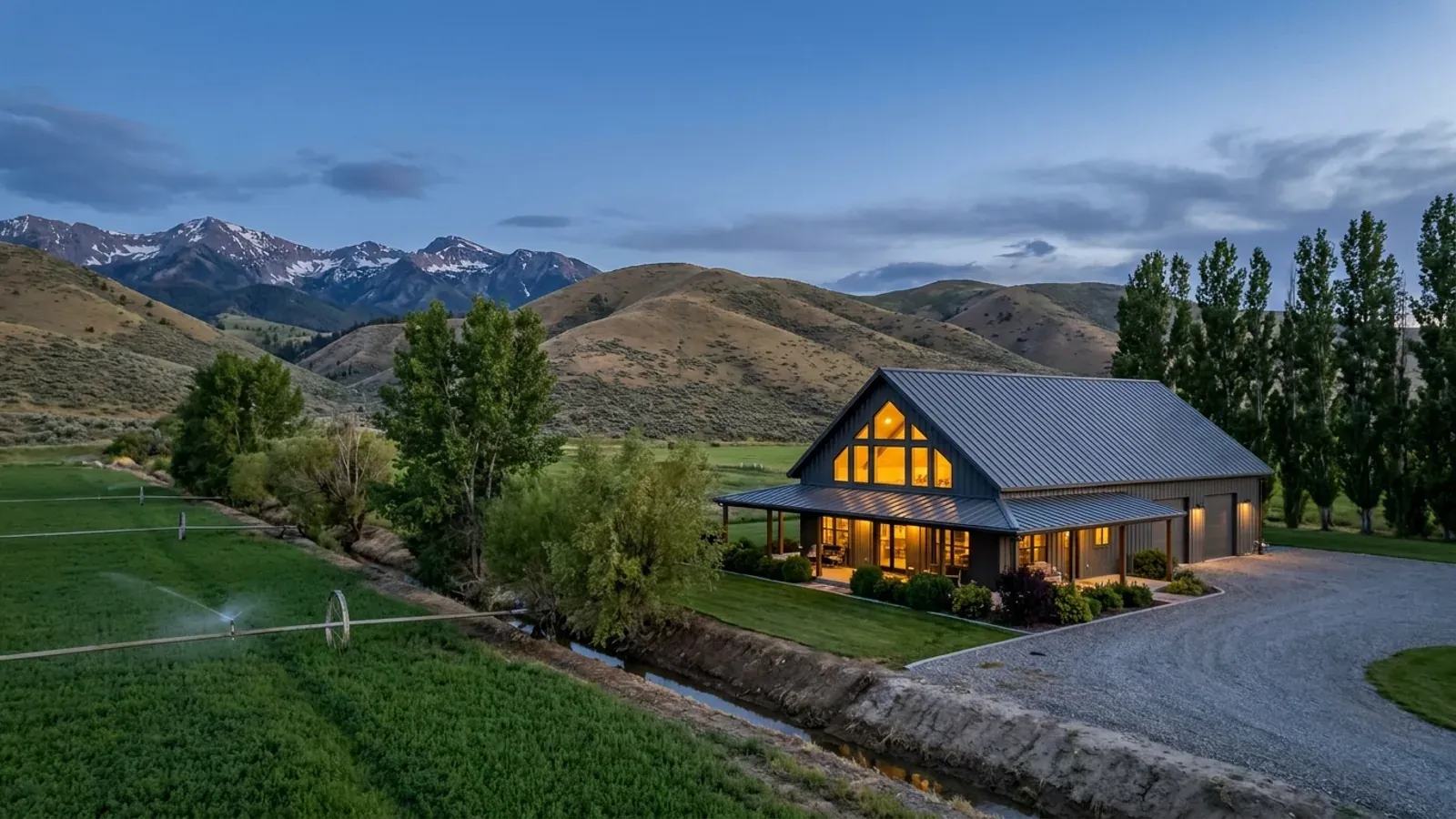
Zoning, septic and water come before the frame
In Idaho the public health districts evaluate sites and permit septic systems, the Department of Water Resources permits every well before it is drilled, and cities and counties decide zoning and, where they run a building program, the building permit. A turnkey build lines those up in the right order so the steel is ordered once, for the right site.
Where we deliver turnkey builds
In Idaho the line that matters is usually a city limit. Inside one, the city zones the land and, where it runs a building program, issues the permit. Outside one, the county zones the land and, if it runs a building program, permits and inspects the house. What changes from place to place is the zoning, the snow load and frost depth the local building department sets, which of the seven public health districts evaluates and permits the septic system, and whether irrigation ditches cross the parcel.
Barndominium builders across Idaho.
Every city and county in Idaho has its own answer on zoning, permits, snow load and septic. The service area pages set out what each one publishes.
What actually decides the price
Square footage is the number everyone leads with, and it is rarely the one that moves a barndominium budget. These four do.
-
Septic system type
The health district's site evaluation decides what kind of system the soil and groundwater allow. A standard gravity drainfield and an alternative system for a difficult site are very different line items.
-
Well depth
A domestic well is priced mostly by depth and what the driller finds. Neighbouring well logs give a rough idea before the rig arrives; the licensed driller you hire is the one to ask.
-
Access, drive and utilities
A long drive across rough ground, a culvert over an irrigation ditch, or a long run for power to the house can cost more than people expect on rural acreage.
-
Interior finish level
Cabinets, flooring, fixtures, trim and appliances are where two identical shells turn into very different finished prices. Deciding the finish level early keeps the budget honest.
Turnkey Builds in Idaho: common questions
8 questions we get asked most often about building in Idaho. If yours is not on the list, ask it directly.
What does turnkey mean for a barndominium?
Do you drill the well?
Who handles the septic system?
Do I need a building permit for a barndominium in Idaho?
How long does a turnkey barndominium take?
Can I do some of the work myself?
Do you build on land with irrigation ditches?
How do I get a price for a turnkey barndominium?
Sources
- Idaho Code 39-4116, local adoption and enforcement of building codes — Idaho Legislature
- Septic and Septage — Idaho Department of Environmental Quality
- Wells Overview — Idaho Department of Water Resources
- Idaho Code 42-1102, ditch and canal rights-of-way — Idaho Legislature
- Idaho Code 67-6511, zoning ordinance — Idaho Legislature
Keep reading
The pages that answer the next question this one raises.
Build Timeline
Each stage from the zoning check to the final inspection, and how long it usually takes.
Read itSite Preparation
Ditches, septic, well and pad, in the order they have to happen.
Read itBarndominium Financing in Idaho
Construction loans and what a lender needs to see before the build starts.
Read itReady to put turnkey builds against a real plan? Start there and the rest follows.
Tell us about the land
Tell us where the parcel is and what you want on it, and we will come back with who has jurisdiction, what the land needs before it can be built on, and a realistic budget range. Starting the survey costs nothing.