Barndominium Builders in Bannock County, Idaho
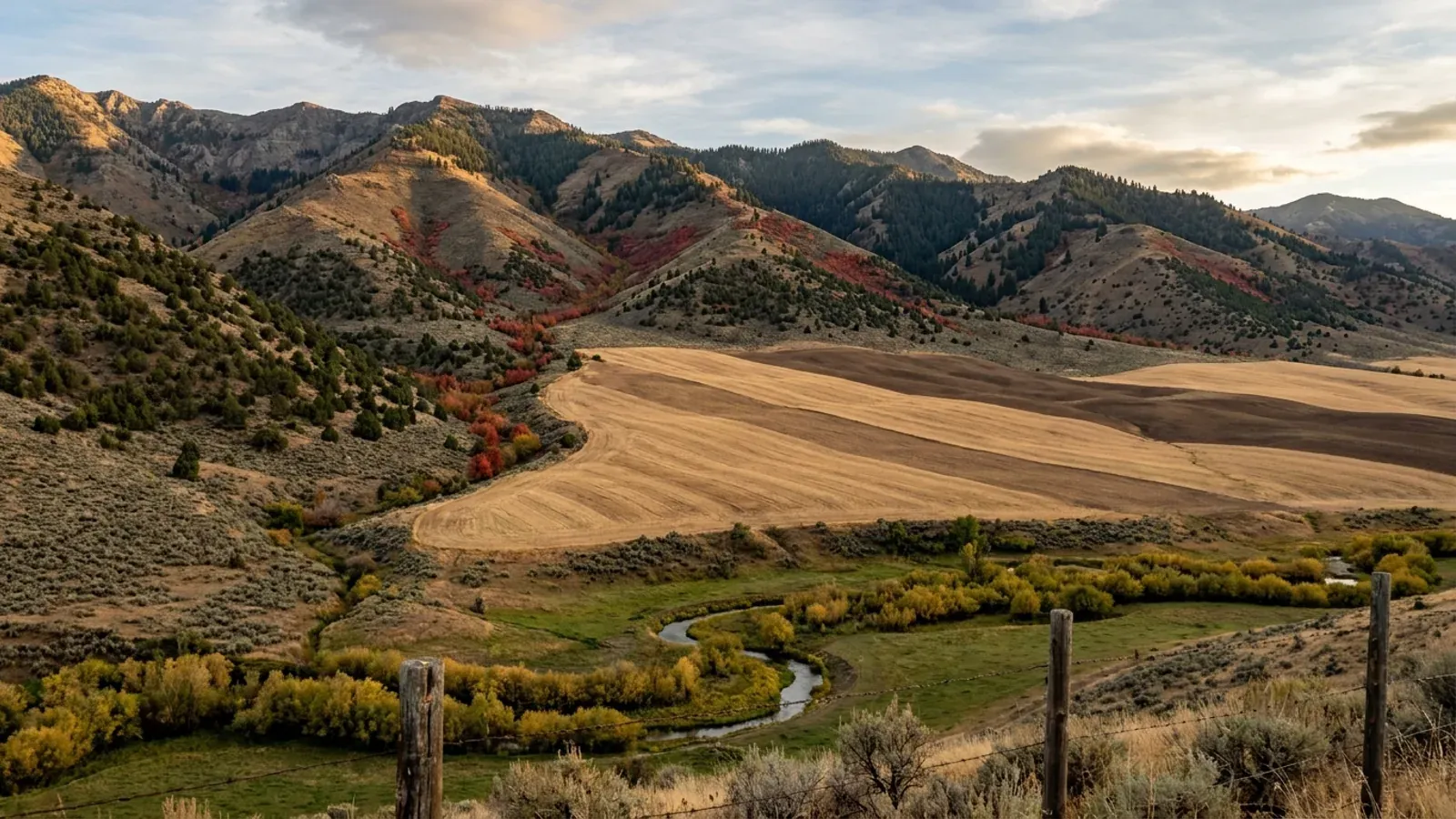
Past the edge of Pocatello and Chubbuck, Bannock County turns into dry farms, rural subdivisions and foothill country reaching south toward McCammon, Arimo and Downey. Most of our barndominium enquiries in this corner of southeast Idaho land out here: a house with a working shop on a few acres, or a homestead on a larger farm holding. Unincorporated land has its own county building program, so zoning checks, plan review and inspections all run through one county office. Barndominium kits fit an owner with the skills and time to raise the frame, and we take over the site prep, the permit set and the finish. A turnkey build hands the whole project to one crew, while pole barn homes earn their keep when a wide, open shop bay is the reason for the building. Elevation surprises many buyers: the county's snow load steps up every few hundred feet, which changes the truss package and the price. Zoning surprises others, because in the farm zone the number of homes a parcel can carry is fixed before you buy. If you would rather build inside the city on a sewered lot, start with our Pocatello page. Send the parcel number through the survey and we will check the zone, the elevation band and the septic route first.
Bannock County at a glance
- County
- Bannock County
- Building permit
- County building department
- Land use
- County agricultural and rural zoning
- Wastewater
- Septic permit: Public Health District
Barndominium Kits and Plans for Bannock County
The parcel decides the budget more than the floor area does, so each option is priced against your land rather than a rate card.
Barndominium Kits
Barndominium kits for sale in Idaho: steel and pole barn shell kits sized to the snow load your building department sets, with honest help on kit prices.
Custom Plans
Custom barndominium plans for Idaho land, drawn around your site, snow load and zoning, and the Idaho residential code your building department enforces.
Pole Barn Homes near Bannock County
A pole barn home sets its frame on posts and trusses (the engineering term is post-frame), which often suits a simple, wide layout with a shop bay under the same roof. Whether it fits your parcel comes down to the zoning and the site, set out below.
Metal Building Homes and Shop Houses in Bannock County
A steel frame, or a shop with living quarters under the same roof: choose the structure first, then check it against the zoning below.
Metal Homes
Metal building homes in Idaho, finished as real houses: insulated for long winters, detailed against condensation, and clad for wildfire country.
Shouses
Shop houses in Idaho: a heated working shop and a home under one roof, planned around your zoning, snow load and the residential code.
Steel Construction
Steel and metal building construction in Idaho: red-iron frames and steel building kits for barndominiums, sized to your site's snow load.
Permits, Zoning and Septic in Bannock County
The building permit, the zoning and the septic permit can come from three different offices. Here is who decides each part in Bannock County, taken from the office or document that publishes it. Rules change, so check them again against your parcel before anything is drawn.
Bannock County Planning and Development Services
On unincorporated land the county's Planning and Development Services office issues building permits and inspects the work. Habitable space always needs a building permit, and a complete application usually takes two to four weeks to review, longer in summer and fall. Most cities with their own building departments, Pocatello and Chubbuck among them, permit inside their limits.
Source: Planning and Development, Bannock County (bannockcounty.gov)
Bannock County Planning and Development Services
The county zoning ordinance sets out an Agricultural (A) district to keep commercial farming viable, a Residential Rural (RR) district for low-density homes in rural settings, and a Residential Suburban (RS) district nearer the cities, among others. The county is drafting a new Land Use and Development Ordinance to replace the current zoning code, so check which rules apply on the day you apply.
Source: Bannock County Zoning Ordinance No. 1998-1, Bannock County (bannockcounty.gov)
Southeastern Idaho Public Health
Bannock County is served by Southeastern Idaho Public Health, which issues septic permits, keeps septic records and publishes the list of approved installers. Every septic system needs an installation permit before work starts, and rural lots here almost always need one.
Source: Septic Systems, Southeastern Idaho Public Health (siphidaho.org)
- Homes per acre in the farm zone
- In the Agricultural district the ordinance allows one dwelling for each 40 acres in single ownership up to 160 acres, then one more for each additional 160 acres (amended 2018). In the Residential Rural district, a conventional subdivision on individual wells or septic needs five-acre lots (ordinance read 27 Sep 2026).
- Snow load rises with elevation
- The county's published design criteria set the ground snow load by elevation, from 44 PSF below 4,600 feet to 125 PSF above 6,800 feet, with a 36-inch frost depth. A barndominium on a foothill parcel needs trusses sized for its own elevation band (Planning and Development page, read 27 Sep 2026).
- The county pole barn guide
- The county publishes a pole barn guide as a basic plan-submittal aid for residential accessory buildings, with limits such as a 50-foot length and 14-foot height. It covers a detached shop, not a home: a barndominium with living space needs a full set of house plans (guide read 27 Sep 2026).
Source: Bannock County Zoning Ordinance No. 1998-1, Bannock County (bannockcounty.gov)
Source: Planning and Development, Bannock County (bannockcounty.gov)
Source: Pole Barn Guide, Bannock County Planning and Development (bannockcounty.gov)
Building on land near Bannock County
Parcel size comes first: in the farm zone the density limit, not the lot size, decides whether a new home is allowed at all, so check how many dwellings the ownership already carries. Most rural homes run on a private well and a septic system, which means an IDWR drilling permit and a licensed driller for the well, and a health district permit for the septic. Foothill ground brings elevation, slope, winter road access and wildfire exposure; valley ground brings irrigation ditches, whose right-of-way cannot be built on or fenced without the ditch owner's written permission. Stream corridors carry their own setbacks and floodplain maps, so check both before placing the house.
Other places in this part of Idaho
Pocatello & Southeast Idaho
- Pocatello
- Chubbuck
- Blackfoot
- Bannock County
- Bingham County
Have land in or near Bannock County? Tell us about the parcel and what you want on it, and we will check it against the local rules before anything is drawn.
Building in Bannock County: questions
Start the surveyHow much does it cost to build a barndominium in Bannock County?
Do I need a building permit for a barndominium in Bannock County?
How much land do I need for a barndominium in Bannock County?
Who approves the septic system for a rural home in Bannock County?
Keep reading
What usually comes next once you know what Bannock County allows.
Barndominium Cost Guide
Sourced per-square-foot ranges by tier and size, and what moves the number on your land.
Read itIs a Barndominium Legal in Idaho?
Zoning, septic and who issues the permit, before you buy the land.
Read itHow Long Does It Take?
From parcel to move-in, and which steps set the clock.
Read itSources for this page
The published pages behind the Bannock County facts above. Rules change, so check the current version with the office before you rely on it.
- Planning and Development, Bannock CountyBuilding permit authority; Snow load rises with elevationbannockcounty.gov
- Bannock County Zoning Ordinance No. 1998-1, Bannock CountyLand use and zoning; Homes per acre in the farm zonebannockcounty.gov
- Septic Systems, Southeastern Idaho Public HealthSewer or septicsiphidaho.org
- Pole Barn Guide, Bannock County Planning and DevelopmentThe county pole barn guidebannockcounty.gov
Other places near Bannock County
Nearby places with their own pages. Across a city limit or a county line the permit office, the zoning and the septic rules can change, so each is covered separately.
Building in Bannock County?
Start with the survey. Tell us where the land is and what you want on it, and we will come back with which offices decide it, what the zoning allows, and a plan to fit.