Barndominium Builders in Kootenai County, Idaho
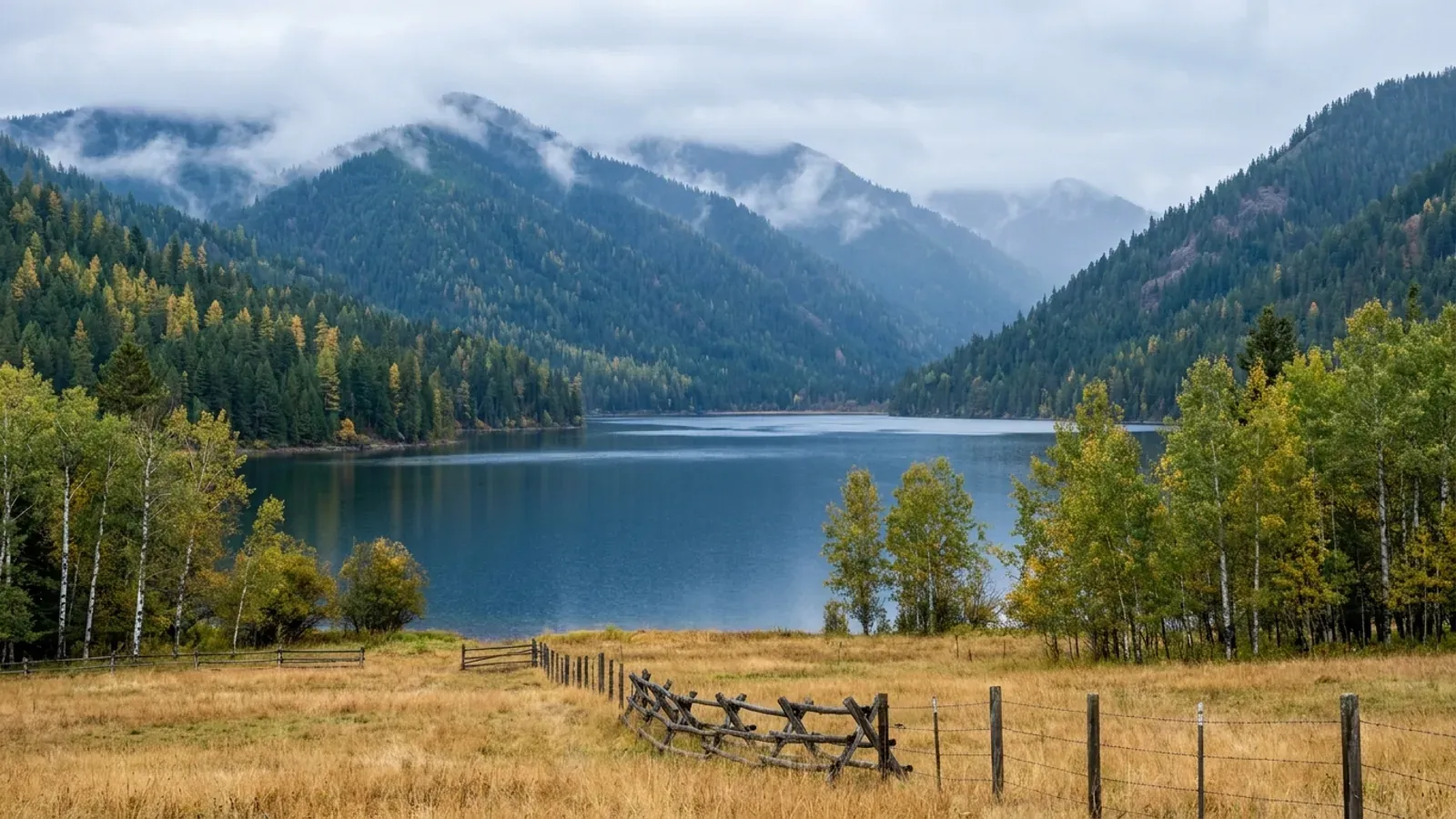
Kootenai County is where the acreage is in the Idaho Panhandle. Once you leave the city limits of Coeur d'Alene, Post Falls, Hayden and Rathdrum, you are on unincorporated land zoned and permitted by the county, and that is where a barndominium with a working shop, a hay barn or a horse paddock makes the most sense. The prairie north and west of the lake is open ground, while the hills and timber to the east and south bring slope and longer driveways. We build complete homes on rural parcels and supply barndominium kits for owners who want to stand the frame themselves. A pole barn home frame is a natural fit for a big equipment shop, and a custom plan lets the living space and the shop share one roof. On county land the first questions are practical: which zone the parcel is in, whether it can carry a septic system over the aquifer, what roof snow load the county expects at that location, and how a well will be drilled. The county building office handles unincorporated land, and our city pages cover in-town lots. Start with the survey: send the parcel number and we will check the zone, the snow-load area and the septic rule before you commit.
Kootenai County at a glance
- County
- Kootenai County
- Building permit
- County building department
- Land use
- County agricultural and rural zoning
- Wastewater
- Septic permit: Public Health District
Barndominium Kits and Plans for Kootenai County
The parcel decides the budget more than the floor area does, so each option is priced against your land rather than a rate card.
Barndominium Kits
Barndominium kits for sale in Idaho: steel and pole barn shell kits sized to the snow load your building department sets, with honest help on kit prices.
Custom Plans
Custom barndominium plans for Idaho land, drawn around your site, snow load and zoning, and the Idaho residential code your building department enforces.
Pole Barn Homes near Kootenai County
A pole barn home sets its frame on posts and trusses (the engineering term is post-frame), which often suits a simple, wide layout with a shop bay under the same roof. Whether it fits your parcel comes down to the zoning and the site, set out below.
Metal Building Homes and Shop Houses in Kootenai County
A steel frame, or a shop with living quarters under the same roof: choose the structure first, then check it against the zoning below.
Metal Homes
Metal building homes in Idaho, finished as real houses: insulated for long winters, detailed against condensation, and clad for wildfire country.
Shouses
Shop houses in Idaho: a heated working shop and a home under one roof, planned around your zoning, snow load and the residential code.
Steel Construction
Steel and metal building construction in Idaho: red-iron frames and steel building kits for barndominiums, sized to your site's snow load.
Permits, Zoning and Septic in Kootenai County
The building permit, the zoning and the septic permit can come from three different offices. Here is who decides each part in Kootenai County, taken from the office or document that publishes it. Rules change, so check them again against your parcel before anything is drawn.
Kootenai County Community Development, Building Division
The Building Division issues permits for single-family dwellings, garages, pole barns and residential storage buildings over 200 square feet, and inspectors enforce the residential, building and energy codes. Its jurisdiction covers structures in the county but not within city limits, so most cities with their own building departments permit inside their limits. Plumbing and electrical inspections on county land are done by state inspectors.
Source: Building, Kootenai County Community Development (kcgov.us)
Kootenai County Community Development, Planning Division
The county Land Use and Development Code, administered by the Planning Division, sets out the Agricultural zone for farming and forestry, the Rural zone for rural residential and agricultural uses, the Agricultural Suburban zone for homes with small-scale farming, and the Restricted Residential zone for one- and two-family living areas. The zone decides whether a dwelling and a large shop can share the parcel, so check it before you buy.
Source: Land Use and Development Code, Title 8, Kootenai County (kcgov.us)
Panhandle Health District
Kootenai County is served by Panhandle Health District, which permits septic systems for properties that cannot connect to a public sewer. A new-system permit follows a soil review at the proposed drainfield and sizing of the tank and field, and it is valid for one year.
Source: Septic Permits & Records, Panhandle Health District (panhandlehealthdistrict.org)
- Snow-load areas on the county map
- Kootenai County's snow-load area map, listed with its building permit forms, sorts the county into Category A with a minimum 40 lb roof snow load, B at 50 lb, C at 60 lb, and Category D where an engineered design is required. The map is for reference; the exact load for a site rests on engineering practice (map read 27 Sep 2026).
- The aquifer septic rule
- Across the Rathdrum Aquifer, Panhandle Health District allows a new septic system only on a parcel of five acres or more, on a parcel created before 20 December 1977, or inside a municipal sewage management area its Board of Health has approved. Much of the open prairie falls under it (guidelines revised June 2026, read 27 Sep 2026).
- Flood zone check by parcel number
- The county keeps FEMA Flood Insurance Rate Maps covering parts of the county that may be flood prone, and a planner will give a flood zone determination for a parcel number. The same office will look up a parcel's zoning from its parcel or serial number (county FAQ, read 27 Sep 2026).
Source: Kootenai County Snowload Areas, Kootenai County Community Development (kcgov.us)
Source: Sewage System Permit Application and Installation Guidelines, Panhandle Health District (panhandlehealthdistrict.org)
Source: FAQs, Kootenai County (kcgov.us)
Building on land near Kootenai County
Rural Kootenai County land sorts itself by three checks. First the zone: Agricultural and Rural ground suits a shop house with animals, while the suburban zones are tighter. Second the septic: over the aquifer a new system generally needs five acres, so a smaller unsewered parcel may not take a house. Third the site: the snow-load category, slope, the driveway and access for the fire district, and whether a flood map touches the parcel. A single-home well does not need a water-right permit in most of Idaho, but it does need an Idaho Department of Water Resources drilling permit and a licensed driller. Idaho's right-to-farm law protects established farms from nuisance claims, so expect neighbouring hay, timber and livestock operations to carry on as they are.
Other places in this part of Idaho
Coeur d'Alene & the Idaho Panhandle
- Coeur d'Alene
- Post Falls
- Hayden
- Rathdrum
- Sandpoint
- Kootenai County
- Bonner County
- Boundary County
Have land in or near Kootenai County? Tell us about the parcel and what you want on it, and we will check it against the local rules before anything is drawn.
Building in Kootenai County: questions
Start the surveyHow much does it cost to build a barndominium in Kootenai County?
Do I need a building permit for a barndominium in Kootenai County?
Which Kootenai County zones allow a barndominium on acreage?
Can I put a septic system on my Kootenai County land?
Keep reading
What usually comes next once you know what Kootenai County allows.
Barndominium Cost Guide
Sourced per-square-foot ranges by tier and size, and what moves the number on your land.
Read itIs a Barndominium Legal in Idaho?
Zoning, septic and who issues the permit, before you buy the land.
Read itHow Long Does It Take?
From parcel to move-in, and which steps set the clock.
Read itSources for this page
The published pages behind the Kootenai County facts above. Rules change, so check the current version with the office before you rely on it.
- Building, Kootenai County Community DevelopmentBuilding permit authoritykcgov.us
- Land Use and Development Code, Title 8, Kootenai CountyLand use and zoningkcgov.us
- Septic Permits & Records, Panhandle Health DistrictSewer or septicpanhandlehealthdistrict.org
- Kootenai County Snowload Areas, Kootenai County Community DevelopmentSnow-load areas on the county mapkcgov.us
- Sewage System Permit Application and Installation Guidelines, Panhandle Health DistrictThe aquifer septic rulepanhandlehealthdistrict.org
- FAQs, Kootenai CountyFlood zone check by parcel numberkcgov.us
Other places near Kootenai County
Nearby places with their own pages. Across a city limit or a county line the permit office, the zoning and the septic rules can change, so each is covered separately.
Building in Kootenai County?
Start with the survey. Tell us where the land is and what you want on it, and we will come back with which offices decide it, what the zoning allows, and a plan to fit.