Barndominium Builders in Teton County, Idaho
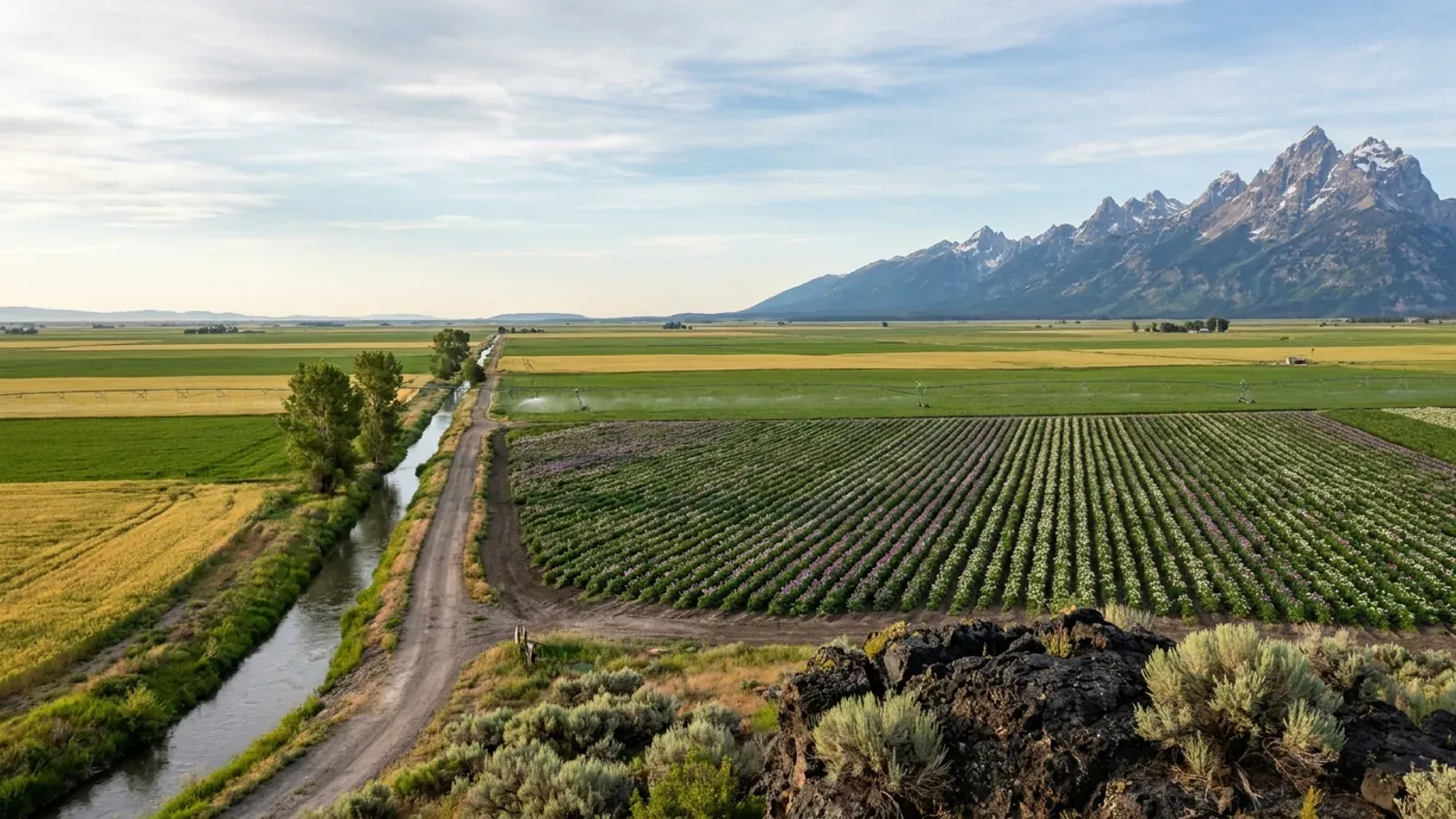
Teton County is the high mountain valley around Driggs, Victor and Tetonia, and it has its own rulebook. The county adopted a new Land Development Code in 2022, and its rural zones are built around low average densities, from one home per 20 acres in Rural Residential to one per 35 acres in the agricultural zones. Height is the rule that bites a barndominium here: primary and accessory buildings are capped at 30 feet, so a tall shop bay has to be designed to that line from the start, and parcels near the state highways or in mapped wildfire areas carry extra review. A pole barn home suits the valley's open ground and heavy winters, and a custom plan lets the roof pitch, the snow shedding and the height cap work together. Barndominium kits make sense for owners who will stand the shell themselves in the short building season. Driggs no longer has a page of its own; this page covers the whole valley, and the neighbouring Madison County page covers the farm country to the west. Send us the parcel through the survey and we will check the zone, the corridor and the wildfire map before any drawing starts.
Teton County at a glance
- County
- Teton County
- Building permit
- County building department
- Land use
- County agricultural and rural zoning
- Wastewater
- Septic permit: Public Health District
Barndominium Kits and Plans for Teton County
The parcel decides the budget more than the floor area does, so each option is priced against your land rather than a rate card.
Barndominium Kits
Barndominium kits for sale in Idaho: steel and pole barn shell kits sized to the snow load your building department sets, with honest help on kit prices.
Custom Plans
Custom barndominium plans for Idaho land, drawn around your site, snow load and zoning, and the Idaho residential code your building department enforces.
Pole Barn Homes near Teton County
A pole barn home sets its frame on posts and trusses (the engineering term is post-frame), which often suits a simple, wide layout with a shop bay under the same roof. Whether it fits your parcel comes down to the zoning and the site, set out below.
Metal Building Homes and Shop Houses in Teton County
A steel frame, or a shop with living quarters under the same roof: choose the structure first, then check it against the zoning below.
Metal Homes
Metal building homes in Idaho, finished as real houses: insulated for long winters, detailed against condensation, and clad for wildfire country.
Shouses
Shop houses in Idaho: a heated working shop and a home under one roof, planned around your zoning, snow load and the residential code.
Steel Construction
Steel and metal building construction in Idaho: red-iron frames and steel building kits for barndominiums, sized to your site's snow load.
Permits, Zoning and Septic in Teton County
The building permit, the zoning and the septic permit can come from three different offices. Here is who decides each part in Teton County, taken from the office or document that publishes it. Rules change, so check them again against your parcel before anything is drawn.
Teton County Building Department
The county Building Department checks that construction meets the adopted building codes and the county's Flood Control Ordinance, using the 2018 I-Codes, and its building rules sit in Title 6 of the county code. Inside Driggs, Victor and Tetonia, confirm with the city which office issues the permit, since each city is its own jurisdiction.
Source: Building Department, Teton County (tetoncountyidaho.gov)
Teton County Planning & Zoning Department
The Land Development Code, effective 3 August 2022 and amended through 27 May 2026, sets zones including RN-5 Rural Neighborhood, RR-20 Rural Residential, RA-35 Rural Agriculture and LA-35 Lowland Agriculture, two Foothills zones and Areas of City Impact around each city. RR-20 and RA-35 average one lot per 20 and 35 acres, with a one-acre minimum lot and a 30-foot height cap.
Source: Code & Policies, Teton County Planning & Zoning (tetoncountyidaho.gov)
Eastern Idaho Public Health
Teton County is served by Eastern Idaho Public Health. Its environmental health staff review wastewater applications, evaluate the site, issue the installation permit and inspect the system, and no septic system may be installed without that permit.
Source: Septic, Eastern Idaho Public Health (eiph.id.gov)
- Scenic Corridor design review
- Development within 500 feet of State Highways 31, 32 and 33 and Ski Hill Road falls in the county's Scenic Corridor, and must pass design review by the Planning & Zoning Commission before a building permit can be issued (Teton County Planning & Zoning FAQs, read 27 Sep 2026).
- Wildfire hazard areas
- Section 5-4-3 of the Land Development Code applies to areas of high wildfire risk on the county's hazard overlay map: principal and accessory buildings must sit within 200 feet of the primary access road, a vegetation and defensible-space plan goes in with the site plan, and fuel breaks at least 10 feet wide run along access roads and driveways (read 27 Sep 2026).
- A second dwelling, sized by parcel
- The county allows up to two dwellings per property, a primary home and one accessory dwelling unit. The ADU is capped at 900 square feet on parcels of 2.5 acres or less, 1,200 between 2.5 and 7.5 acres, and 1,500 above that, and every ADU needs a building permit and a residential impact fee (Planning & Zoning FAQs, read 27 Sep 2026).
Source: FAQs, Teton County Planning & Zoning (tetoncountyidaho.gov)
Source: Code & Policies, Teton County Planning & Zoning (tetoncountyidaho.gov)
Source: FAQs, Teton County Planning & Zoning (tetoncountyidaho.gov)
Building on land near Teton County
Before buying, confirm the parcel has residential building rights: the county warns that 20-acre-plus splits made for farming alone carry no right to build a house until they go through the subdivision process. Then check the zone, the Scenic Corridor distance from the highways, the wildfire overlay and the floodplain, since the county runs its own flood damage prevention ordinance. Low-lying ground includes wetlands and floodplains, which the Lowland Agriculture zone exists to protect, and wet ground can limit where a septic field goes. Snow loads vary sharply with elevation, and the design load for your lot is set by the building official or your engineer. Without a public water system, a well needs an IDWR drilling permit and a licensed driller.
Other places in this part of Idaho
Idaho Falls & Eastern Idaho
- Idaho Falls
- Ammon
- Rexburg
- Rigby
- Bonneville County
- Madison County
- Jefferson County
- Teton County
Have land in or near Teton County? Tell us about the parcel and what you want on it, and we will check it against the local rules before anything is drawn.
Building in Teton County: questions
Start the surveyHow much does it cost to build a barndominium in Teton County?
Do I need a building permit for a barndominium in Teton County?
How much acreage do I need for a barndominium in Teton County?
Can a barndominium in Teton County have a tall shop bay?
Keep reading
What usually comes next once you know what Teton County allows.
Barndominium Cost Guide
Sourced per-square-foot ranges by tier and size, and what moves the number on your land.
Read itIs a Barndominium Legal in Idaho?
Zoning, septic and who issues the permit, before you buy the land.
Read itHow Long Does It Take?
From parcel to move-in, and which steps set the clock.
Read itSources for this page
The published pages behind the Teton County facts above. Rules change, so check the current version with the office before you rely on it.
- Building Department, Teton CountyBuilding permit authoritytetoncountyidaho.gov
- Code & Policies, Teton County Planning & ZoningLand use and zoning; Wildfire hazard areastetoncountyidaho.gov
- Septic, Eastern Idaho Public HealthSewer or septiceiph.id.gov
- FAQs, Teton County Planning & ZoningScenic Corridor design review; A second dwelling, sized by parceltetoncountyidaho.gov
Other places near Teton County
Nearby places with their own pages. Across a city limit or a county line the permit office, the zoning and the septic rules can change, so each is covered separately.
Building in Teton County?
Start with the survey. Tell us where the land is and what you want on it, and we will come back with which offices decide it, what the zoning allows, and a plan to fit.