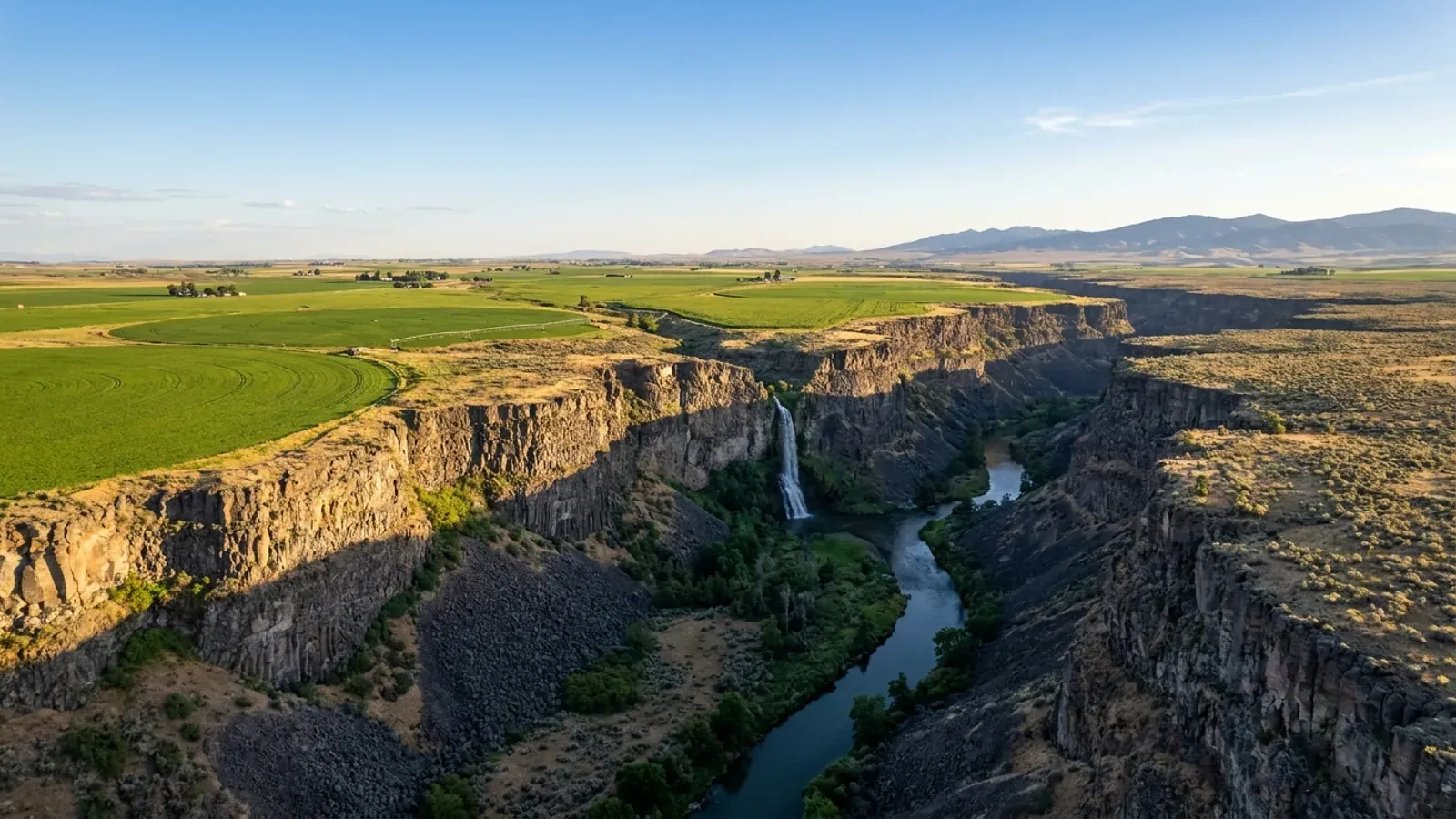
Barndominium Builders in Twin Falls, Idaho
Twin Falls is the county seat and the working hub of the Magic Valley, and most land inside the city limits is platted subdivision ground served by city sewer, city water and canal-fed pressurized irrigation. A barndominium fits here when it is drawn as a house for the lot: the zoning district decides height and setbacks, and the Building Safety Department reviews the plans and inspects the work the same way it would for any new home. The strongest candidates are deeper lots on the edge of town and parcels in the city's area of impact, where a shop bay can sit beside the living space without crowding the street. Buyers who want several acres, livestock or a long equipment building usually do better in the countryside, and our Twin Falls County page explains who permits there. Barndominium kits make sense for an owner whose own crew will stand the shell; a custom plan fits a tight city lot where every foot of setback matters; and a pole barn home gives the widest clear span where the lot allows it. Send the address through the survey and we will check the zone, the sewer tap and the irrigation line before any drawing starts.
Twin Falls at a glance
- Principal county
- Twin Falls County
- Building permit
- City building department
- Land use
- City planning and zoning
- Wastewater
- Public sewer
Barndominium Kits and Plans for Twin Falls
The parcel decides the budget more than the floor area does, so each option is priced against your land rather than a rate card.
Barndominium Kits
Barndominium kits for sale in Idaho: steel and pole barn shell kits sized to the snow load your building department sets, with honest help on kit prices.
Custom Plans
Custom barndominium plans for Idaho land, drawn around your site, snow load and zoning, and the Idaho residential code your building department enforces.
Pole Barn Homes near Twin Falls
A pole barn home sets its frame on posts and trusses (the engineering term is post-frame), which often suits a simple, wide layout with a shop bay under the same roof. Whether it fits your parcel comes down to the zoning and the site, set out below.
Metal Building Homes and Shop Houses in Twin Falls
A steel frame, or a shop with living quarters under the same roof: choose the structure first, then check it against the zoning below.
Metal Homes
Metal building homes in Idaho, finished as real houses: insulated for long winters, detailed against condensation, and clad for wildfire country.
Shouses
Shop houses in Idaho: a heated working shop and a home under one roof, planned around your zoning, snow load and the residential code.
Steel Construction
Steel and metal building construction in Idaho: red-iron frames and steel building kits for barndominiums, sized to your site's snow load.
Permits, Zoning and Septic in Twin Falls
The building permit, the zoning and the septic permit can come from three different offices. Here is who decides each part in Twin Falls, taken from the office or document that publishes it. Rules change, so check them again against your parcel before anything is drawn.
City of Twin Falls Building Safety Department
Inside the city limits, the Building Safety Department's permitting staff issue permits and certificates of occupancy, and every new single-family structure needs a permit. A detached residential accessory building over 200 square feet needs one too, which catches most shops, and all electrical, plumbing, mechanical and gas work must be permitted. A parcel outside the limits goes to the county's building department instead.
Source: Permit Responsibilities and Requirements, City of Twin Falls (tfid.org)
City of Twin Falls Planning and Zoning Department
The Planning and Zoning Department administers the comprehensive plan and City Code Title 10, the zoning code, whose current version was adopted on 1 January 2026. It also reviews building permit requests and plans growth in the city's area of impact beyond the limits, so for an edge-of-town parcel ask first which rules and which office apply.
Source: Planning and Zoning, City of Twin Falls (tfid.org)
City of Twin Falls Wastewater Department
About 157 miles of city sewer main carry wastewater to the treatment plant, and the city maintains the mains. The homeowner owns the service line, typically a four-inch pipe from the house to the main, so on a deep lot its length and route belong in the budget.
Source: Wastewater Department, City of Twin Falls (tfid.org)
- City design loads
- The Building Safety Department's residential design criteria give a ground snow load of 15 psf, with a 25 psf minimum roof load set by local ordinance, a frost depth of 24 inches and a 115 mph wind speed, and list the elevation as 4,154 feet at Twin Falls Airport (read 27 Sep 2026).
- Canal water for lawns and gardens
- The city's pressurized irrigation runs on canal water: the city calls its water rights into the Twin Falls Canal Company, which decides when to release water from Milner Dam. Canals usually start filling in the second or third week of April, the season usually ends in mid-October, and the city warns that canal water is not safe to drink (read 27 Sep 2026).
- Septic outside the sewer
- Where a parcel cannot reach city sewer, South Central Public Health District's Environmental Health Specialists review the application and issue the permit for a new or replacement septic system, and the district's land development page carries a list of questions to ask before buying property to build (read 27 Sep 2026).
Source: Design Criteria: Residential, City of Twin Falls (tfid.org)
Source: Canal Water Pressurized Irrigation, City of Twin Falls (tfid.org)
Source: Land Development, South Central Public Health District (phd5.idaho.gov)
Building on land near Twin Falls
Most Twin Falls lots sit in platted subdivisions, so read the covenants as closely as the zoning; some restrict metal siding, roof pitch or outbuildings. Pressurized irrigation pipe and open laterals run behind many back fences. Any ditch crossing the lot belongs to someone else's right-of-way, and nothing goes in it (not a slab, a fence or a tree) until the ditch owner agrees in writing, so mark it on the site plan before the shop is placed. Lots toward the Snake River canyon rim bring views along with a closer look at slope and footings. On the edge of town, confirm whether the parcel is inside the limits or in the area of impact, because that decides who reviews the plans and whether a sewer main is close. Beyond the mains, a private well starts with an IDWR drilling permit.
Other places in this part of Idaho
Twin Falls & the Magic Valley
Have land in or near Twin Falls? Tell us about the parcel and what you want on it, and we will check it against the local rules before anything is drawn.
Building in Twin Falls: questions
Start the surveyHow much does it cost to build a barndominium in Twin Falls?
Do I need a building permit for a barndominium in Twin Falls?
Can I build a barndominium with a big shop on a Twin Falls city lot?
Where can I find acreage for a barndominium near Twin Falls?
Keep reading
What usually comes next once you know what Twin Falls allows.
Barndominium Cost Guide
Sourced per-square-foot ranges by tier and size, and what moves the number on your land.
Read itIs a Barndominium Legal in Idaho?
Zoning, septic and who issues the permit, before you buy the land.
Read itHow Long Does It Take?
From parcel to move-in, and which steps set the clock.
Read itSources for this page
The published pages behind the Twin Falls facts above. Rules change, so check the current version with the office before you rely on it.
- Permit Responsibilities and Requirements, City of Twin FallsBuilding permit authoritytfid.org
- Planning and Zoning, City of Twin FallsLand use and zoningtfid.org
- Wastewater Department, City of Twin FallsSewer or septictfid.org
- Design Criteria: Residential, City of Twin FallsCity design loadstfid.org
- Canal Water Pressurized Irrigation, City of Twin FallsCanal water for lawns and gardenstfid.org
- Land Development, South Central Public Health DistrictSeptic outside the sewerphd5.idaho.gov
Other places near Twin Falls
Nearby places with their own pages. Across a city limit or a county line the permit office, the zoning and the septic rules can change, so each is covered separately.
Building in Twin Falls?
Start with the survey. Tell us where the land is and what you want on it, and we will come back with which offices decide it, what the zoning allows, and a plan to fit.